- The AI Trust Letter
- Posts
- The Semantic Chaining Attack
The Semantic Chaining Attack
Top AI and Cybersecurity news you should check out today

Rodrigo Fernandez
February 02, 2026

Welcome Back to The AI Trust Letter
Once a week, we distill the most critical AI & cybersecurity stories for builders, strategists, and researchers. Let’s dive in!
🚨 NeuralTrust Discovers A New Image Jailbreak Attack: Semantic Chaining

The Story:
NeuralTrust researchers identified a new image-based jailbreak technique called semantic chaining. Instead of triggering a single obvious policy violation, attackers can spread harmful intent across multiple steps. Each step appears benign on its own, but together they bypass safety controls.
The details:
The attack breaks a malicious goal into small semantic steps distributed across images, prompts, or tool calls
Safety systems evaluate each step in isolation and fail to detect the combined intent
The technique works especially well in multi-step workflows such as agents, copilots, and chained reasoning systems
Traditional filters focused on single inputs or outputs are not designed to catch this pattern

Why it matters:
Semantic chaining shows how AI systems can be manipulated without obvious red flags. As agents and workflows become more complex, security controls must evaluate intent across steps, not just individual requests. Otherwise, harmful outcomes can emerge even when every single interaction looks safe.
👀 US Cyber Defense Chief Accidentally Shared Sensitive Government Data With ChatGPT

The Story:
The head of US Cyber Command and the National Security Agency accidentally uploaded sensitive government information into ChatGPT while testing or using the tool for work related tasks. The incident highlights how easily generative AI can be misused in high trust environments.
The details:
The official pasted content that included non public government information into ChatGPT
The data was not intended for disclosure and should not have been shared with external systems
The incident was disclosed during a public discussion on AI use inside government agencies
It adds to a growing list of cases where employees unintentionally expose sensitive data through AI tools
Why it matters:
As AI tools become embedded in daily workflows, even senior leaders can make mistakes. Without clear policies, training, and controls around what data can be shared with AI systems, organizations risk leaking sensitive information through normal usage. Shadow AI tools can prevent this from happening.
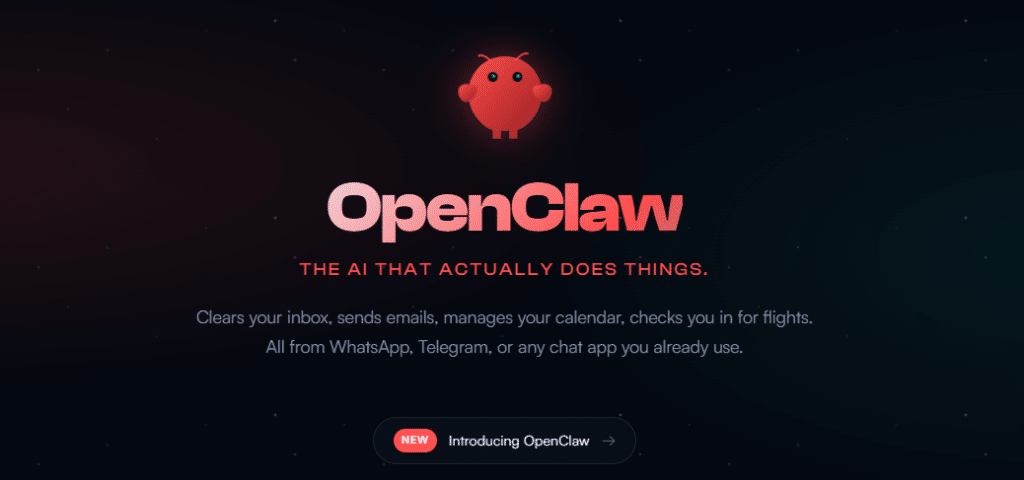
🧠 OpenClaw Shows How Agentic AI Can Be Turned Against Itself
The Story:
OpenClaw is a proof of concept that shows how agentic AI systems can be manipulated to take harmful actions by chaining together tools, permissions, and context in unintended ways.
The details:
OpenClaw demonstrates how AI agents with access to tools and APIs can be steered into executing unsafe actions without exploiting traditional software vulnerabilities
The risk comes from over-permissioned agents that can plan, reason, and act across multiple steps
Many existing security controls focus on model outputs, not on the actions agents take once connected to real systems
Some early guardrails, such as tighter permission scopes, action-level logging, and kill switches for agent workflows
Why it matters:
AI sovereignty is becoming a major theme in national strategy, procurement, and regulation. But if the goal is framed as total independence, most initiatives will fail on day one. The more useful approach is to treat sovereignty as risk management: mapping critical dependencies, deciding what must be controlled locally, and building fallback plans when parts of the AI stack remain external.
🤖 Agentic AI Becomes the New Attack Surface

The Story:
Security teams are starting to treat agentic AI as a new category of attack surface. A recent analysis shows how AI agents that plan, act, and connect to tools are becoming prime targets for abuse, often without exploiting classic software flaws.
The details:
Agentic systems expand the attack surface by combining reasoning, memory, and tool access in a single workflow
Attackers do not need to break systems if they can influence what an agent is allowed to do or how it interprets context
Over permissioned agents can be pushed into unsafe actions such as data access, system changes, or lateral movement
Many defenses still focus on model safety, while agent behavior and execution paths remain lightly monitored
Why it matters:
Agentic AI shifts security risk from isolated prompts to continuous decision making across systems. As more organizations deploy agents to automate real work, security teams need to rethink how they define boundaries, permissions, and oversight. Treating agents as first class attack surfaces is becoming necessary, not optional.
🖥️ Mapping AI Threat Actors with Real World Signals

The Story:
NeuralTrust analyzed threat actor behavior using GreyNoise data to understand how attackers are starting to probe and interact with AI systems. Instead of guessing future risks, the research looks at what malicious actors are already doing in the wild.
The details:
Internet wide scanning data shows growing interest in AI related endpoints, APIs, and exposed services
Many actors are not targeting models directly but the surrounding infrastructure that supports AI workloads
Patterns suggest early stage reconnaissance rather than full scale exploitation, similar to how cloud attacks began years ago
The gap between experimental probing and real attacks is narrowing as AI systems become more connected to production data and tools
Why it matters:
This research shows that AI threats are not theoretical. Attackers are already mapping the landscape. For security teams, this is a signal to treat AI infrastructure as part of their active threat model, not a future problem. Early visibility into attacker behavior can make the difference between preparation and reaction.
What´s next?
Thanks for reading! If this brought you value, share it with a colleague or post it to your feed. For more curated insight into the world of AI and security, stay connected.
